‘Even after all this time?’
‘Always.'
— J. K. Rowling, Harry Potter and the Deathly Hallows
Intro
I am a Physics and Mathematics double major at National Taiwan University. I spent a term at the University of Waterloo, Ontario, as an exchange student in the Faculty of Mathematics, where I studied stochastic systems with Professor Matthew Scott. Currently, I am also working on theoretical biophysics with Dr. Wei-Hsiang Lin from Academia Sinica, Taiwan. In the summer of 2026, I am part of a fully funded research internship at the Santa Fe Institute, New Mexico.
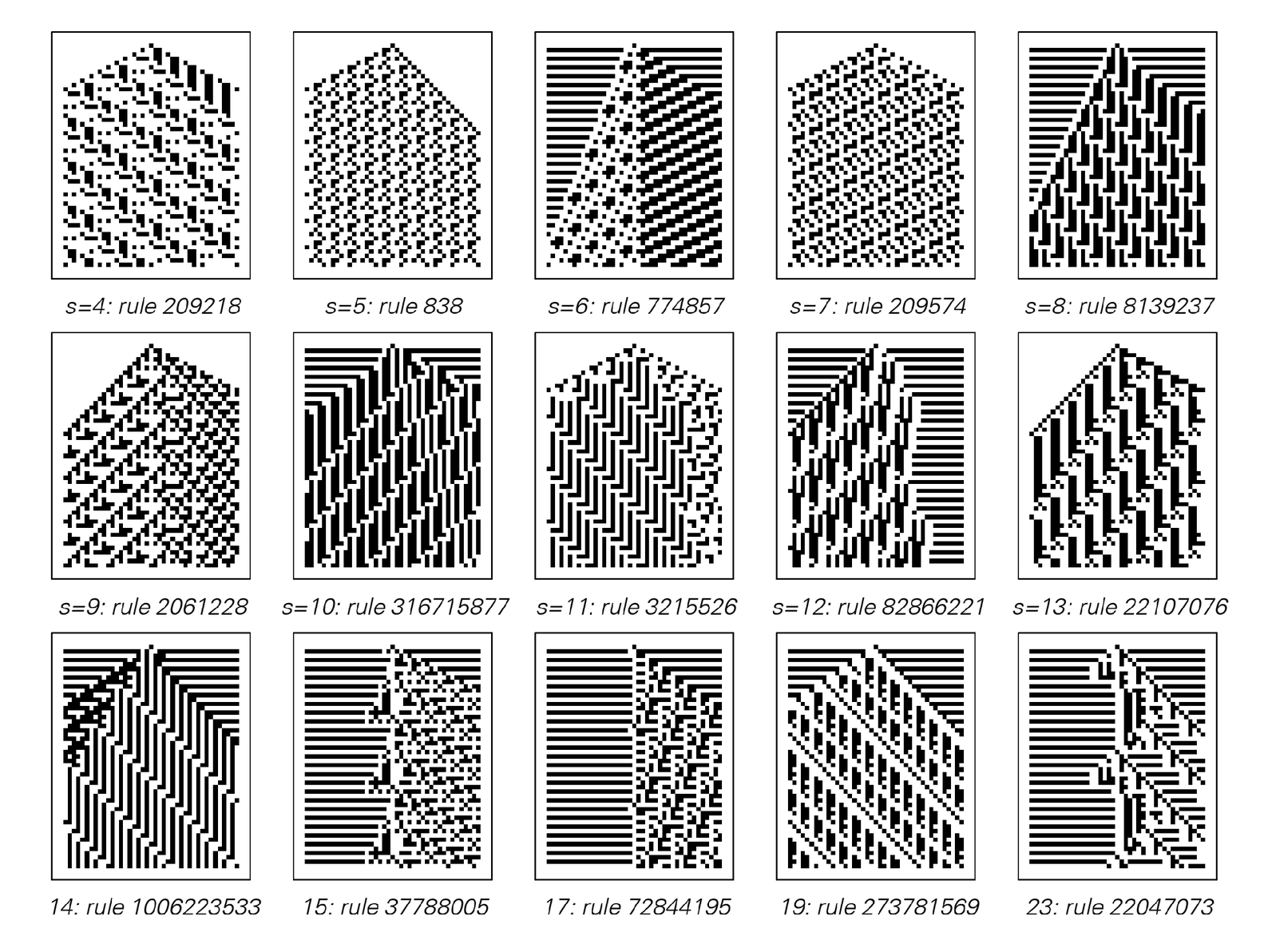
From the lens of a physicist, life can be treated as emerging from the basic interactions of many simple, unconscious components. Metaphorically, we can find patterns and laws even in the most irregular systems, and it is such irregularity that defines the unique fingerprints of complex phenomena such as life. This is akin to the cellular automata of Ulam and von Neumann, which is a two-state system following simple, constant rules on a 2D grid, that is able to simulate a Turing complete system. This means in turn that a cellular automata can in theory compute like our modern computers.
The Nobel Prize in Physics 2021 was awarded “for groundbreaking contributions to our understanding of complex physical systems”. Whether it is bird flight, cell self-organization, or economic growth, their emerging structure can all be elucidated by principles of physics. Three of the ten most recent Solvay Conferences have been dedicated to the study of living matter and complex matter, for example the most recent one in 2023 was hosted by Giorgio Parisi and others, on the nature of disordered systems. With advancememts in the field of biotechnology, the recent pandemic, and the rapid incorporation of AI into academic research, I believe the study of complex systems will become a huge part of physics in the days to come.
Why?
This is a question that resists a clear answer.
For a while I really liked to watch The Big Bang Theory, and got to know the classic sci-fi series Star Trek from the main character Sheldon Cooper (whose name is said to be based on 1972 Nobel Prize in Physics laureate Leon Cooper). In the series, the main character Captain James Cook and Spock set on a five-year mission to explore the universe on the starship Enterprise. One of the most famous quotes from the series is:
"To boldly go where no man has gone before"
This represents the exploration of the unknown, the breaking of boundaries, and the spirit of innovation. In the movie, the mission of the Enterprise is to explore the last remnants of the universe, and to find new life and civilization in the barrenness. For me, this is what doing research is like: Rationally, it is not always the most perfect choice at the moment. What we do are not bound to change the world, and the path of getting there and nowhere is possibly very lonely. However, it is of essence of a () to think what no-one has thought, and to see what no-one has seen – this is in itself something workth coming back to.

The study of complex systems is a relatively niche field in Taiwan. Contrasted with the current faze in LLM, machine learning, and quantum computing in academia, the people working in this field are extremely diluted. For me, the path of finding an academic support network and getting to know researchers in the field has forced me into many activities which would have been way outside my comfort zone. In spring 2026, at the end of my exchaneg at UWaterloo, I had the chance to go to Princeton University to chat with a few PhDs and professors. Contrary to my belief, I did not fall into anxiety after hearing about their awe-inspiring trajectories. A PhD candidate from Taiwan told me that he had switched to his current advisor three years into his PhD, and surprisingly found great progress then. Many people there have extremely unique and diverse trajectories in life, and many more got to know what kind of research and life they would like to lead only after getting into grad school.
Outside of Academics
In my free time, I am an avid fan of chess, traveling, hiking, photography, magic, poetry writing, and music. If you haven’t heard of music by the Taiwanese band The Chairs, I recommend you take a dive in, starting from here and here.
Recently, I am also enchanted by the music of Pink Floyd (Wish You Were Here, Comfortably Numb), Wayne’s So Saㄎ(Wanderer Guide In Taipei, Illusion of Love), Beach House (Take Care, Space Song), Radiohead (No Surprises), The 1975 (Somebody Else), and Taylor Swift (Folklore).
If I were to recommend must-watch movies, my list would definitely include: The Unbearable Lightness of Being, Eternal Sunshine of the Spotless Mind, Poor Things, Fiddler On The Roof, and the entire Harry Potter series.
「這麼多年了,你依然如此深愛她?」
「一直如此。」
— J. K. 羅琳,《哈利波特與死神的聖物》
簡介
我是國立臺灣大學的物理學與數學雙主修學生,關注物理定律與生命系統交會之處那片安靜而深邃的邊界。2026 年我在加拿大安大略省的滑鐵盧大學數學學院交換一個學期,並與 Matthew Scott 教授研究隨機系統。目前,我也正在中研院的林暐翔助研究員指導下,從事理論生物物理的研究。2026 年夏天,我在新墨西哥州的聖菲研究所參與研究實習計畫。
從物理的角度來看,生命可以視為很多簡單、無意識的構造,藉由極為簡單、基礎的相互作用湧現的性質。譬喻意義上來說,就是再無序的系統中都可以找到規律,同時也是這些規律定義了生命等複雜現象獨一無二的指紋。這就像烏拉姆(Ulam)和馮.紐曼(von Neumann)的細胞自動機可以由簡單、恆定的規則和二維網格上的雙態系統(”on” 和 “off”),建立出一個圖靈完備的系統。這表示我們可以用細胞自動機模擬圖靈機,並進行像電腦一樣的運算。
2021 年諾貝爾物理學獎頒發給「對我們理解複雜物理系統作出開創性貢獻」的三位物理學家。無論是鳥群飛行、細胞自我組織,或是經濟成長,其湧現出的結構都能透過物理學的原理獲得闡明。近十屆索爾維會議之中,更是有三屆以生命物質與複雜物質為主題;例如最近一次於 2023 年舉行的會議,便由 Giorgio Parisi 等人主持,探討無序系統的本質。隨著生物科技的進展、近年疫情的衝擊,以及人工智慧迅速融入學術研究,我相信複雜系統的研究將在未來成為物理學中極為重要的一部分。
為什麼?
這是個不容易回答的問題。
有一陣子我非常喜歡看《The Big Bang Theory》,也因此從它的主角 Sheldon Cooper(據說以 1972 年諾貝爾物理學獎得主 Leon Cooper,也是 BCS 理論中的 “C”,為名)知道了經典科幻作品《星艦奇航記》這部影集。在影集中,主角詹姆士.寇克艦長和史巴克(Spock)搭乘被稱為企業號的星艦進行長達五年的任務,探索宇宙。《星艦奇航記》中最有名的一段話是
“To boldly go where no man has gone before” 這句話象徵著探索未知、打破界限與創新的精神。在電影中,企業號的任務是探索宇宙最後的邊疆,在荒蕪中尋找新的生命和文明。對我來說,做研究的意義就是這樣,在當下不一定是理性上最完美的決定、不一定會馬上改變這個世界、路途也可能非常孤獨,但是身為拓荒者的本質就是去想沒有人想過的,去看到沒有人看到過的——這本來就是一件很值得回味的事情。同時,有時候我也承認踏入前人未至之境的當下,更多是感覺迷路的,甚至到了終於找到路後,也沒有勇者般的光榮感。仔細回想,我在大學期間投入了很多事情,但是如果可以再來一次,我一定會更偏執地做到這件事,畢竟沒有試過的事情永遠不會知道適不適合自己。
複雜系統的研究在台灣是一個相對冷門的領域,與現在學術圈對 LLM、機器學習以及量子電腦的風潮相比,能夠投入研究的人是少之又少。我想,在尋求研究支援、認識相關領域的研究者的過程,也逼迫我參加不少本來不會參加的活動,還有偶爾踏出生活中的舒適圈。2026 春,交換結束之際,我因緣際會到了普林斯頓大學跟幾位學長姐和教授聊研究相關的事情,與原本預期不同的是,我沒有因為聽到了各位學長姐厲害的經歷就陷入焦慮,也沒有被教授輝煌的歷史震懾至無法繼續向前。一位台灣來的博士生向我說,他到了三年級才決定換成現在的指導教授,此時博士生涯已經過了大半。這裡大多人的軌跡都是獨一無二的,很多人進到研究所後過了兩年才摸索出自己真正想做的研究,也有人在一次大會報告後被主持教授延攬去,一起完成了一篇關於原本專題一個小論點的論文,那位學長的指導教授也花了大筆時間在離學校十萬八千里的西岸經營自己的新創公司。
學術之外
沒有埋頭於研究時,我喜歡西洋棋、旅行、攝影、鑽研魔法(通靈)、作詩、音樂和電影。如果你還沒聽過椅子樂團的歌,你可以先從這裡和這裡開始。
最近,我也很喜歡 Pink Floyd(Wish You Were Here, Comfortably Numb)、傷心欲絕(《台北流浪指南》、《月光灑落的地方》)、Beach House(Take Care, Space Song)、Radiohead(No Surprises)、The 1975(Somebody Else)和 Taylor Swift(Folklore)。
如果要我推薦幾部一定要看的電影,我的名單一定會包含《生命不可承受之輕》、《無瑕心靈的永恆陽光》(雖然我是中國用語的反對者,不過我不能接受這部電影的台譯片名,反而中國的翻譯更能反映出原文取自 Alexander Pope 1717 長詩 Eloisa to Abelard 中的句子 “Eternal Sunshine of the Spotless Mind”)、《可憐的東西》、《屋頂上的小提琴手》、《哈利波特》全集。